Empower instead of divide?
One community. Two possible effects.
Community creates belonging, identity, and strength. It can divide or empower. It can look away or take a stand together. What happens when fan power turns into support?



One community. Two possible effects.
Community creates belonging, identity, and strength. It can divide or empower. It can look away or take a stand together. What happens when fan power turns into support?

A picture can your life
Change even if
it never existed.

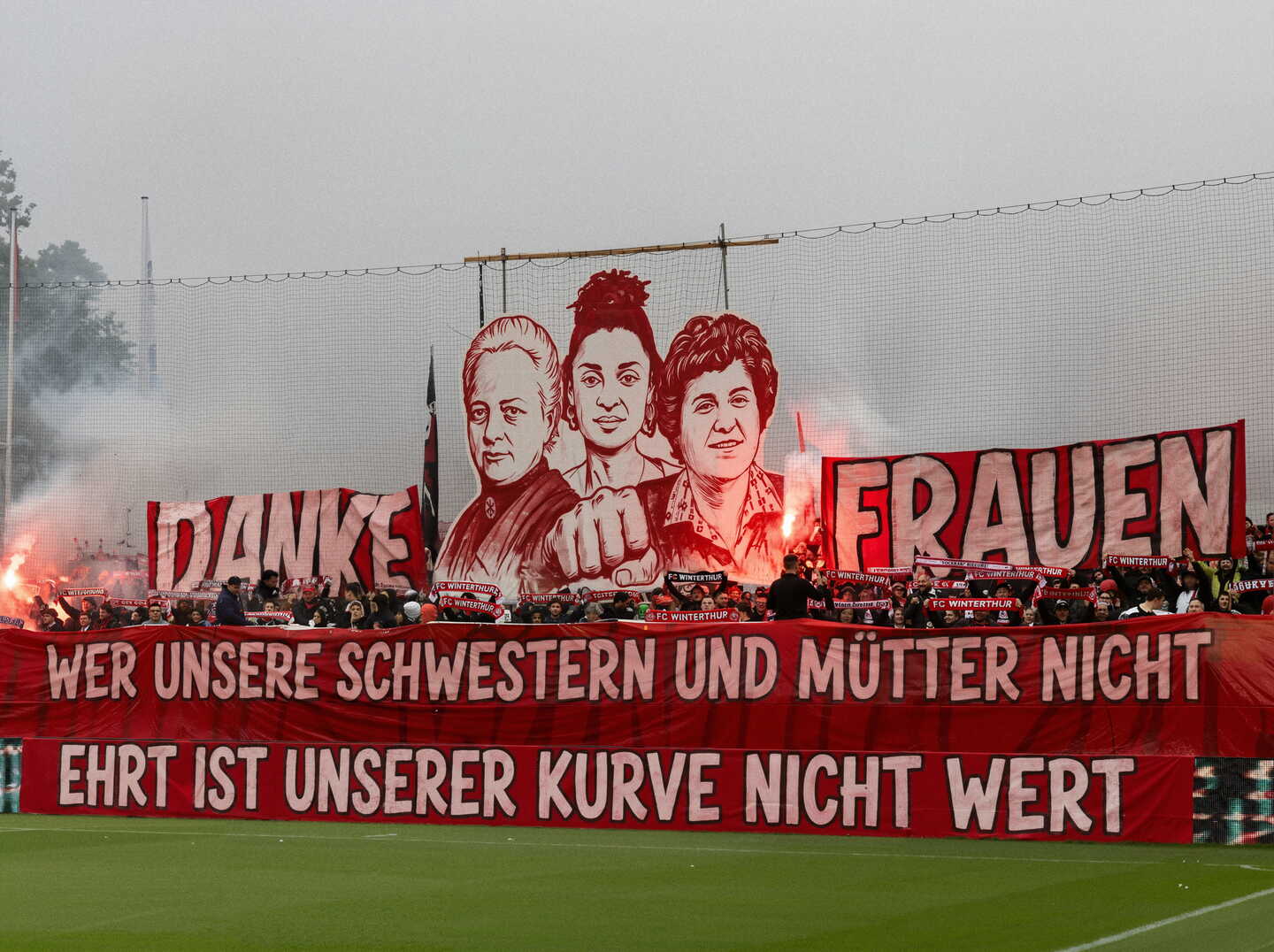
The original photograph shows the FC Winterthur team in front of their supporters' stand. Fans, players, flags, colours: a community united by a club and a shared passion for football.
*For the exhibition, the image was enlarged using AI. In the process, the AI altered or generated certain details. While the scene itself is authentic, not every visible detail is.*
The second image was altered using AI.
The fans in the stand are making a visible statement together: “Those who do not respect our sisters and mothers are not worthy of our stand.”
This scene did not actually take place. But the question behind it is real: What happens when a community uses its collective power to stand up against division?

Groups provide us with a sense of orientation and belonging. Online, this can quickly lead to a 'camp mentality': if you aren't one of us, you automatically belong to 'the others'.

Anger and outrage create attention and a sense of community. But when a group defines itself primarily by who it is against, discussion can quickly turn into exclusion.

What triggers many reactions becomes more visible. As a result, highly emotional, provocative, or polarising posts can keep appearing in our feeds, giving the impression that everyone is just against one another.

We are not simply at the mercy of these dynamics. Communities can dissent, provide context, offer support, and show that there is room for different opinions, but not for denigration.

Does a post make you angry? Stop for a moment before you comment or share. That exact reaction might be part of its intended effect.
Follow people and sources that see things differently to you. Not to agree with them, but to understand them better.
A statement is not the whole person. You can disagree without devaluing others.
Is someone being attacked or excluded? Support those who remain respectful or stand up against denigration.
It’s not just hate and outrage that generate reach. Share content that provides context, offers nuance, and opens up new perspectives.
Your feed. Your community. Your impact.
What if, together, we amplified less of what divides us and more of what connects us?